

Description
▶ Watch the Full Trailer on YouTube
📖 Documentation & PDF Manual — Setup and Blueprint/C++ guides
💬 Discord Community & Support — Ask questions and get help
🌐 AshenForge Website — Our studio and products
Give your Mass entities health, abilities and combat
Build enemy hordes, opposing armies or waves of attackers with Unreal Engine's native Mass Entity system. MassForge gives those entities custom attributes, abilities, effects, targeting and projectiles, with shared gameplay APIs for Blueprint and C++.
Keep your own spawn logic, AI and movement. Add the combat rules your game needs, without creating an Actor or an Ability System Component for every unit.
From a stat to a complete combat flow
Your attributes: create Health, Armor, Mana or your own stats. Define defaults, limits, modifiers, regeneration and derived values.
Your abilities: configure costs, cooldowns, charges, conditions, targeting and reusable effects.
Attacks with visible impact: launch Mass projectiles, resolve damage when they hit, and connect the results to your presentation.
Entities and players: apply damage, healing, buffs and debuffs between Mass entities and Actor-based gameplay through the integration APIs.
State you can inspect: read live attributes, tags and abilities, trace gameplay events, diagnose setup issues and handle rejected operations explicitly.
State you can keep: capture and restore entity gameplay state with schema migration and stale-handle protection.
Use editable Data Assets and Blueprint nodes for gameplay authoring. Use the public C++ APIs and processor-safe queued operations where your simulation needs them. You choose when, where and how entities spawn.
Five playable examples included
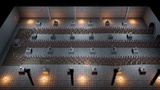
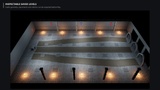
Tower Defense: three routes, enemy waves, placement ghosts, tower upgrades and projectile combat.
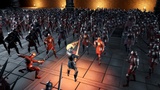
Third-Person Horde Defense: defend a strongpoint against armored attackers with player abilities and visible spells.
Third-Person Horde Defense — VAT: the same game using vertex-animation textures and material-driven animation states.
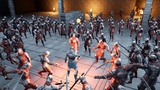
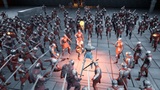
Battle Simulator: opposing armies with melee, ranged and support roles, targeting, damage and healing.
Survivor Roguelite: survive growing crowds, gain experience and choose upgrades from clickable cards.
Each example has its own saved, editable level. Open the shared menu, play a game, then inspect its level, assets and gameplay implementation. The paired horde examples show how skeletal and VAT presentation can use the same combat state.
Learn it, adapt it, build your game
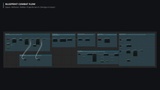
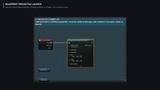
Illustrated 0.3.0 documentation includes a Blueprint Quick Start, C++ Quick Start, authoring recipes, runtime diagrams and a downloadable PDF manual. The original 0.2.0 guides remain available in the version menu.
Included editor tools help generate starter assets, check project health, inspect entities and trace gameplay events. The examples use the plugin's gameplay systems; your project can use its own GameMode, spawning, movement and presentation.
Start playing: enable Show Plugin Content and open /MassForge/MassForge/L_MF_ShowcaseMenu.
Compatibility and scope
Unreal Engine 5.0–5.8 · Win64 · Single-player. Use the download matching your engine version. Multiplayer and replication are outside the supported scope.
Built-in Unreal dependencies. MassGameplay, Enhanced Input and Niagara are required; older engine editions declare additional built-in compatibility dependencies. See the installation guide.
Native Mass, extended. MassForge supplies the gameplay layer. Your game owns AI decisions, navigation, movement and rendering. It can coexist with GAS.
Scale with clear limits. Allocation, simulation and visible animation have different costs. One million allocated entities does not mean one million visible, animated characters; profile the workload your game actually runs.
Trailer music
'Titan' by Scott Buckley — released under CC-BY 4.0. www.scottbuckley.com.au. Music edited for this trailer.